
On May 20, 2015, Dr. Karen Thacker of the Allegheny County Health Department issued a press release announcing a standing order to allow pharmacists in Allegheny County (Pennsylvania) to dispense intranasal and injectable naloxone without a prescription to at-risk patients and caregivers. This standing order is allowed by Pennsylvania Act 139, which was passed in late September 2014. This act allows:
- First responders, such as fire and police departments, to carry and administer naloxone; previously, only paramedics and physicians were permitted to administer it.
- Legal protection for those reporting opioid overdose to emergency personnel.
- The provider to be able to administer naloxone upon completion of a training program.
This legislation does not mandate the administration by these providers, but rather allows first responders and pharmacists to administer it at their discretion.
What is Naloxone?
Naloxone (Narcan®) is an opioid antidote, which binds to the same receptors in the brain as narcotic drugs such as heroin or oxycodone. It binds these receptors more strongly than the narcotics, but does not elicit the same response; rather, it blocks the drugs’ response. When given to an overdosing patient, the naloxone will “kick off” the drug from the receptors and help the patient to stop overdosing.
How does Pennsylvania compare to other states?
In recent years, overdose deaths from narcotics and prescription opioids have increased greatly. Increasing naloxone availability can help reduce the risk of overdose death. Some opponents argue that providing a greater safety net through legislation such as Act 139 can lead to increased risk of opioid use, since narcotic users will feel that they can get away with using higher doses and falling back on naloxone if necessary. To the contrary, many studies have shown that harm-reduction practices such as needle exchange and increasing naloxone availability do not promote higher drug use, but rather promote lower opioid use and increased willingness to participate in rehabilitation and addiction treatment.
Pennsylvania is among a growing number of states allowing greater access to naloxone. Currently, 34 total states and the District of Columbia have passed legislation allowing increased access to naloxone; 26 states and the District of Columbia have passed Good Samaritan laws to those administering naloxone or summoning medical aid in an overdose emergency. The following map shows the current distribution of naloxone policy in the continental states. Additionally, Alaska has the Good Samaritan law but not increased access to naloxone and Hawaii does not have either.
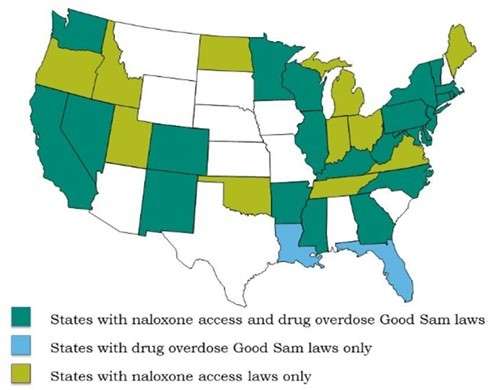
Source: https://www.networkforphl.org/_asset/qz5pvn/network-naloxone-10-4.pdf
PHSI sees the change to naloxone laws as another step forward for pharmacy. Not every pharmacist or pharmacy will need to provide naloxone, but being prepared through education and training is prudent. These opportunities will continue to guide pharmacy into being healthcare providers.
If you have provided naloxone to a patient, which product/dosage form was it?